
A Same-Day Hot Water Swap Still Needs a Certificate, a Tempering Valve and a Relief Drain
 Fiona Delaney
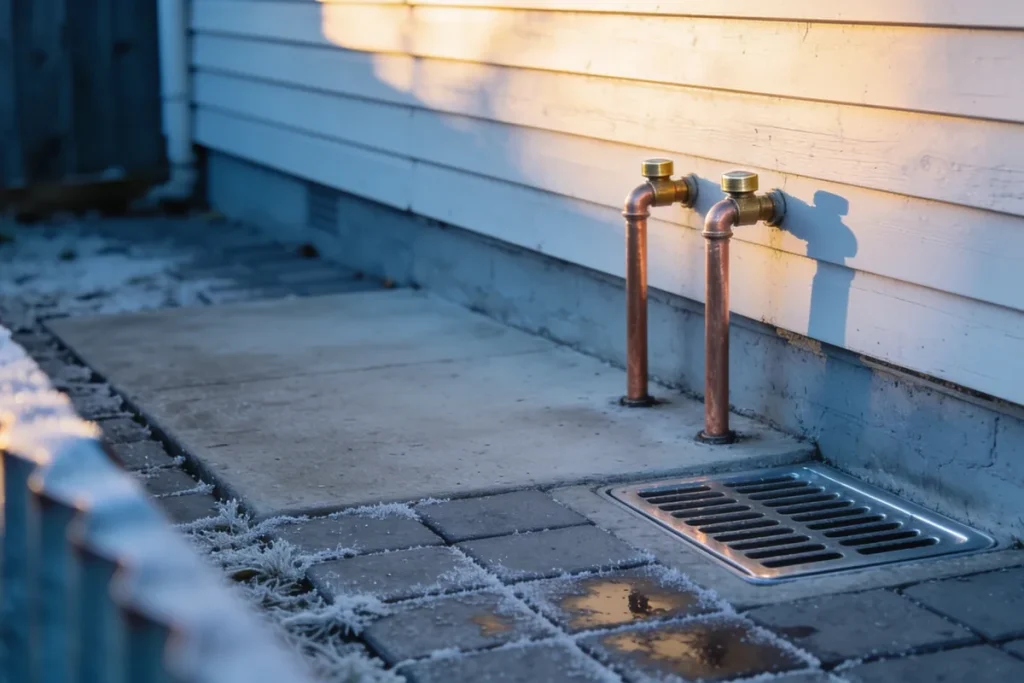
Picture a house on a cold July morning. The shower runs lukewarm, then cold, and by the time the kettle has boiled you have worked out that the storage tank has given up. A plumber can come today. The quote is a number on the phone, and it is a relief, because nobody wants a second day without hot water.
That relief is fair, and this post is not here to slow it down. Our position is a plain one: speed does not waive the paperwork or the safety fittings. Ask the licensed plumber to name, on the quote, the delivery-temperature device (or the code reason none is needed), the temperature and pressure relief valve and where it drains, and the certificate the state requires, with a copy to you. A hypothetical quote line further down shows what that looks like on paper.
A word on limits. This is general information, not plumbing or legal advice, and plumbing rules differ by state. It covers only what the National Construction Code and three state regulator pages (New South Wales, Queensland and Western Australia) let us pin down. Where your state is not covered, check your own plumbing regulator. Repairs, heat pumps, solar and rebates are outside it.
Fast Is Fine, and the Paperwork Still Applies
A same-day swap is a real need. A household with a baby or an elderly relative cannot wait a week for a booking, and a plumber who says “I can do it today” is doing you a kindness.
The two things are not in conflict, because the certificate is completed at the end of the work. The New South Wales Government’s plumbing inspection documents page says plumbers and drainers “must complete a CoC”, a Certificate of Compliance, at the completion of all plumbing and drainage work, and that a copy must go to the person who arranged the work. Nothing in that sequence needs a delay. It needs a plumber who finishes the job and then fills in the form.
So on the phone, add a second question to “can you come today?”: “and will you give me the certificate afterwards?”
The Tempering Valve: What It Does and When the Code Asks for One
A tank stores water hot so it can last through a long shower. A tempering valve is one of the devices that keeps what reaches the taps cooler than what sits in the tank.
The National Construction Code, Volume Three, Part B2 covers heated water services. Clause B2D5, in both the NCC 2022 and NCC 2025 text, sets a limit of 50 degrees Celsius at outlets used for personal hygiene in most cases. It drops to 45 degrees in sensitive settings: aged care residential parts, patient care areas, early childhood centres and schools used by children, and designated accessible facilities in certain building classes. B2D6 lists the devices that meet the limit. For 45 degrees it is a thermostatic mixing valve or a thermostatically controlled tap. For 50 degrees it can also be a tempering valve or a temperature limited water heater. The limit is met “in accordance with AS/NZS 3500.4”, a standard behind a paywall, so this post goes no further than the code’s own words.
Does a replacement need one? That depends on the state, the edition of the code and what was there before. Here is what the code text says.
NCC 2022, New South Wales variation (B2D6). The device requirement applies on “replacing a hot water heater, regardless of the type or location of the heater”. There is an exemption where only some, not all, of the heating units in a manifold water heater are replaced.
NCC 2022, Victorian variation (B2D5). Where a water heater is replaced, a temperature control device is required where such a device was in place before. All new solar water installations, including solar water heater replacements, must comply.
NCC 2022, national text (B2D5). The delivery limit does not apply to replacing a water heater unit in the same location “where the original installation did not require a temperature control valve”.
NCC 2025, national text. The explanatory information lists a heater replaced with a like-for-like heater, and one replaced with a different type, among the scenarios B2D5 and B2D6 cover.
The code is adopted state by state and editions differ. This post does not say which edition applies where. So stop asking “is a valve required?” and ask the plumber to write the device and the clause that requires it, or the clause that exempts the job.
The Relief Valve and Where It Drains
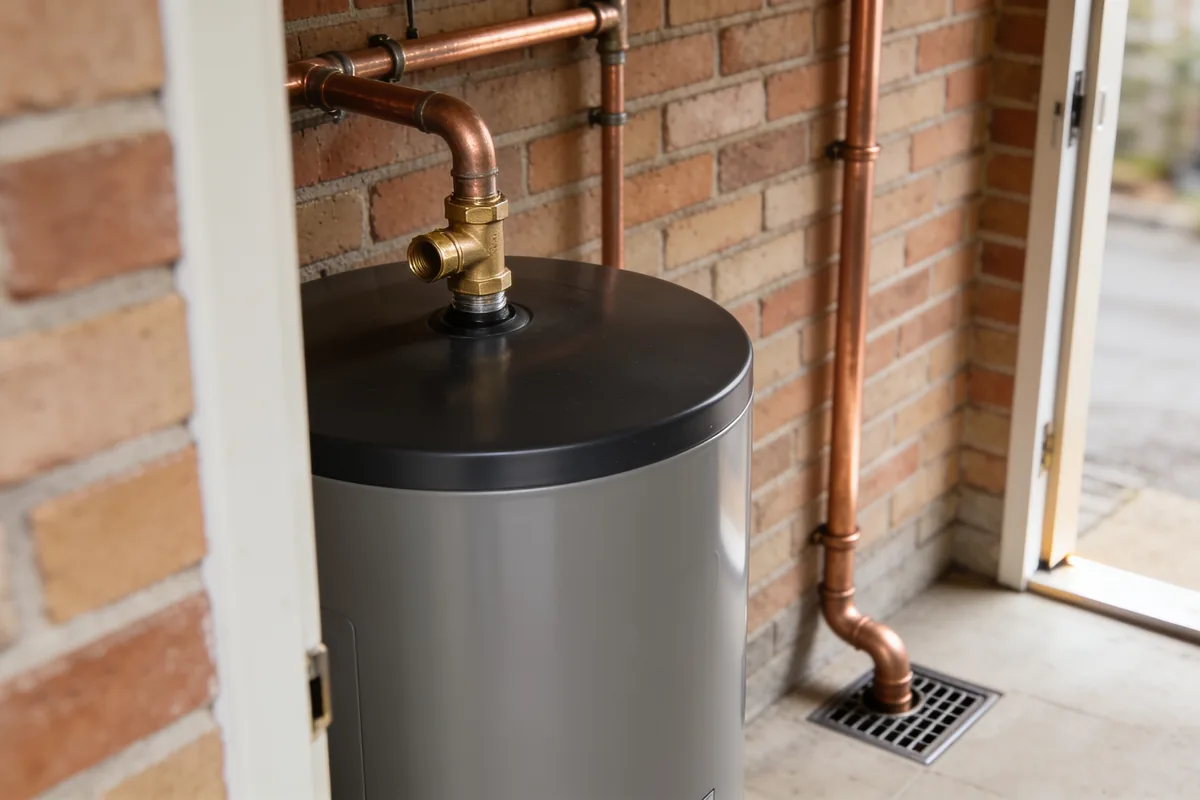
The second fitting is the one quotes tend to leave out. A storage tank holds heated water under pressure, so it needs a safe way to let pressure and heat escape.
Clause B2D7 says a storage water heater must have a temperature and pressure relief device, again “in accordance with AS/NZS 3500.4”. The related performance clause is B2P6 in NCC 2025 and B2P5 in NCC 2022. It says pressure must be relieved so the maximum rated working pressure or 1,400 kilopascals, whichever is the lesser, is not exceeded, and it names a limit of 99 degrees Celsius on water temperature.
You do not need to memorise that. The practical question is simple: which relief device is being fitted, and where does its discharge run? The drain detail sits in AS/NZS 3500.4, which this post has not opened, so it goes no further. The relief outlet is a safety path, so leave it to the plumber.
The Certificate: What Your State Says
Here the rules turn state by state. Two could be pinned down.
New South Wales. The Government page says plumbers and drainers must complete a Certificate of Compliance at the completion of all plumbing and drainage work, with a copy to the person who arranged it. The same page says a Notice of Work is not needed for minor works such as “replacing tap ware and existing hot water systems”. The Notice of Work is lodged before starting and the certificate is handed over at the end. The page does not say in terms that a hot water replacement needs a certificate, so ask which paperwork will be lodged for your job.
Queensland. The Queensland Government’s inspection certificates page, last reviewed in August 2022, says an inspection certificate records an inspection of “all plumbing and drainage permit work”. Copies go to the permit holder and the owner. The page does not mention hot water systems, so ask whether your replacement is permit work and who will send you the certificate.
Western Australia. The Building and Energy page this post uses is about complaints, not certificates, so it does not say who receives a certificate. Ask the plumber, and ask Building and Energy if the answer is unclear.
Not covered here: Victoria’s certificate arrangements, and Tasmania, South Australia, the ACT and the Northern Territory. Queensland’s guidance on temperature control devices is also outside this post. In any of those places, check your state’s plumbing regulator. The questions below still work wherever you live.
A Hypothetical Quote Line, Weak and Better
Here is a made-up pair of lines. No business, brand, size or price is meant.
| Hypothetical quote line | What it tells you |
|---|---|
| Weak: “Supply and install hot water unit, 1 day, all included” | Nothing about the unit type, the temperature device, the relief valve or the paperwork. “All included” is a promise with no detail behind it |
| Better: “Supply and install [unit type]. Delivery-temperature device: [device named], or the code clause that exempts this job. Temperature and pressure relief valve fitted, discharging to [drain or location]. Certificate required in [your state] completed on finishing, copy to the owner” | Names the device or the exemption, the relief valve and where it drains, and the certificate with a copy to you |
The square brackets are the blanks a good plumber fills in. You are not trying to trip anyone up. You are making sure that what was said on the phone matches what is written down.
If the Paperwork Does Not Arrive
Say a busy plumber finishes at dusk and the certificate is not in your inbox a week later. Start with a polite request in writing, even a text message, and keep the quote and the invoice together, because they show what was agreed.
If it still does not arrive, or the work worries you, the regulator is the next step. Western Australia’s Building and Energy says a plumbing complaint applies where the work was completed within the last six years, and that issues “can usually be resolved through open discussion with your contractor”. Other states have a similar route, but this post has not pinned any other state’s time window, so check yours. Nothing here is a claim about warranty or insurance; ask the manufacturer or your insurer if that matters to you.
When the Plumber Says No Valve Is Needed
The other side has a fair point. Sometimes a plumber will tell you no tempering valve is needed for your job, and that can be correct.
The national text of NCC 2022 exempts replacing a water heater in the same location where the original installation did not require a temperature control valve, and a manifold system where only some units are replaced is an exemption in the New South Wales variation. Some owners read a valve as “recommended” rather than required for this reason, and on an exempt install that reading can be right. A quick, cheap swap is a real need, and a plumber who says plainly that your job is exempt is not cutting a corner.
But “no valve needed” is a claim you can check. Ask the plumber to write the clause that exempts the job on the quote. If the exemption is real, they will have it to hand.
The Invoice Is the Checklist
Whatever the speed of the job, three lines belong on the quote and the invoice: the delivery-temperature device, named, or the clause that says none is needed; the temperature and pressure relief valve, with where it drains; and the certificate your state requires, with a copy to you. With those three in writing, you can enjoy the hot shower.
Sources: Australian Building Codes Board, NCC 2022 Volume Three, Part B2 Heated water services (https://ncc.abcb.gov.au/editions/ncc-2022/adopted/volume-three/b-water-services/part-b2-heated-water-services); Australian Building Codes Board, NCC 2022 Volume Three, New South Wales, Part B2 Heated water services (https://ncc.abcb.gov.au/editions/ncc-2022/adopted/volume-three/5-new-south-wales/b2-heated-water-services); Australian Building Codes Board, NCC 2025 Volume Three, Part B2 Heated water services (https://www.abcb.gov.au/editions/ncc-2025/adopted/volume-three/b-water-services/part-b2-heated-water-services); NSW Government, Plumbing inspection documents (https://www.nsw.gov.au/housing-and-construction/compliance-and-regulation/plumbers-and-drainers/plumbing-inspection-documents); Queensland Government, Inspection certificates (https://www.business.qld.gov.au/industries/building-property-development/building-construction/plumbing-drainage/inspection-certificates); Western Australia Building and Energy, Plumbing work complaints (https://www.wa.gov.au/organisation/building-and-energy/plumbing-work-complaints)