
Windscreen Replacement: The Camera Calibration That Belongs on the Invoice
- Automotive
-
Oct 08
- Share post
 Fiona Delaney
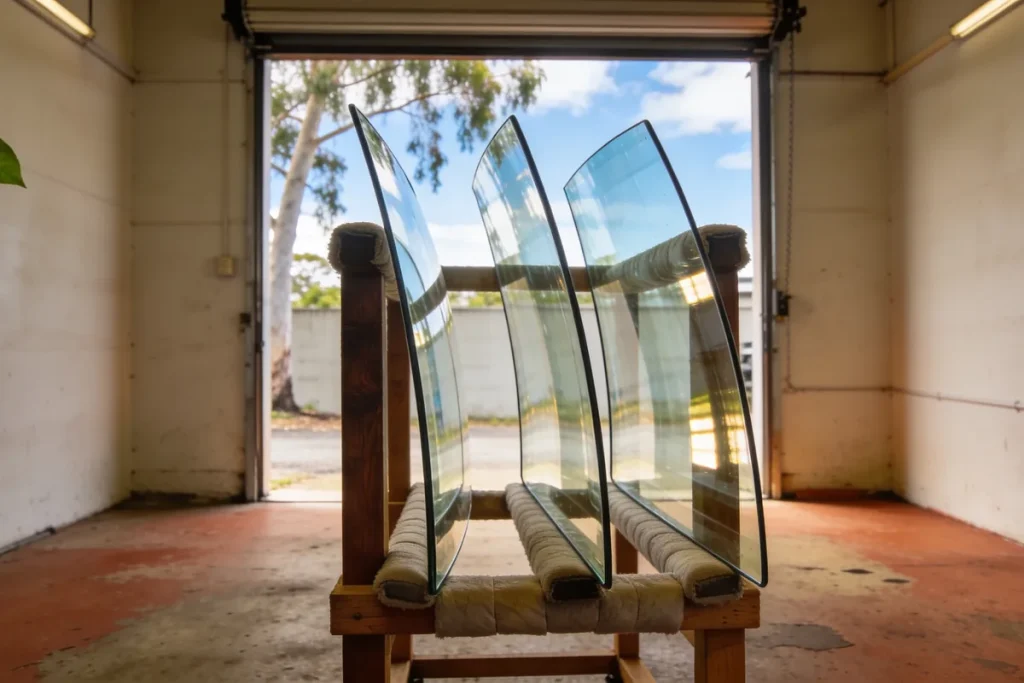
The chip that ran into a crack
It usually starts with a sound you can’t quite place. A stone flicks up off the road, there’s a sharp tick on the glass, and when you look again there’s a small star sitting somewhere in your line of sight. You might tell yourself you’ll deal with it next week, and most of us do exactly that. Then a hot afternoon or a cold morning comes along, and the little star has grown a line that runs across the screen.
If that’s where you are right now, you’re in good company. Most people find themselves ringing around for windscreen replacement quotes with one question in mind, which is how much. It’s a fair question, and those calls tend to go quickly: a make, a model, a year, a number.
What often doesn’t come up in those calls is a word many drivers have never heard used about glass, and that word is calibration. On a lot of newer cars, the windscreen is more than a window. It’s where a small camera looks out at the road, and that camera helps run some of the car’s safety features. When the glass changes, the camera has to be set up again so it reads the road properly.
This piece is about that one step, and about making sure it shows up on your invoice instead of being quietly assumed.
How to tell if there is a camera behind your glass
The easiest place to start is the rear-view mirror. Sit in the driver’s seat and look at the area just behind it and above it. If there’s a plastic housing there, often a small box or a moulded cover sitting against the glass, there’s a good chance it holds a forward-facing camera. It can be easy to miss if you’ve driven the car for years and never really looked up there.
The car’s features can give it away as well. RACQ lists lane keep assist, lane departure warning, traffic sign recognition and autonomous emergency braking among the features that rely on the windscreen camera. So if your car nudges you back when you drift over a line, shows the speed limit on the dash, or has ever braked on its own when the traffic ahead stopped, it’s sensible to assume a camera is involved.
You don’t have to work it out alone, though. Your owner’s manual will usually describe the driver assistance features your car has, so it’s worth a look while you’re waiting for quotes to come back. And when you ring a fitter, it helps to give them your VIN or your rego rather than only the make and model. That lets them look up the car itself instead of guessing from the badge on the boot.
Having the number handy before you pick up the phone means that first conversation can start with your actual car, which saves a call back later.
Why new glass means recalibrating the camera
According to RACQ, when a windscreen is replaced on a car with one of these cameras, the camera must be recalibrated. Once the new glass is in, the camera’s view of the road has to be checked and adjusted so the safety features behave the way they were designed to.
RACQ describes two ways this is done, and it helps to know both before you start comparing quotes.
A static calibration happens in the workshop. The car is set up in a precise position, and target boards are placed in front of it for the camera to read. Getting that position right is most of the job.
A dynamic calibration happens out on the road. The car is driven to a drive cycle set by the manufacturer while the camera settles back in. RACQ gives the example of a Ford Ranger, which, according to RACQ Auto Glass’s Mike Aro, needs to be driven at more than 40km/h for about 10 minutes. RACQ puts a drive like this at anywhere from 5 to 30 minutes.
Some cars need both, one after the other. Which method your car needs comes from the manufacturer’s procedure for that vehicle, so it isn’t something you or the fitter have to guess at.
There’s one more case RACQ mentions that’s easy to miss. Lifted utes need recalibrating too. If your ute has been raised, or you’re planning to raise it, mention that when you ring around, so the fitter has the whole picture from the start.
None of this needs to feel technical once it’s in front of you. You’re simply asking how the camera will be set up again, and which of the two methods your car calls for.
Repair first, if the chip allows
If you’ve caught the damage while it’s still a chip, you might not need a new windscreen at all. A repair fills the chip and leaves the original glass where it is. That matters here, because when the screen stays in place, the camera mount isn’t disturbed.
It’s tempting to let a chip wait while the car still drives perfectly well, and it’s okay if you’ve been putting it off. But if you do decide to get it looked at, sooner tends to leave you with more choices than later.
The one thing to ask about directly is where the chip sits. If it’s in the area the camera looks through, whether it can be repaired is a question for the fitter, who can see the damage up close. There’s no rule you can apply from the driver’s seat, and you don’t need to measure anything yourself. Let the person looking at it make the call, and ask them to explain their reasoning in plain terms.
If the answer is repair, you’ve kept your original screen. If the answer is replacement, the rest of this piece is for you.
Genuine or aftermarket glass
Once replacement is on the table, the next question is usually what glass goes in. Your quote might offer genuine glass from the car maker, or aftermarket glass made by someone else, and it isn’t always obvious which one you’re being offered.
It helps to know what one car maker has said about this. Subaru Australia, speaking about its EyeSight system, said EyeSight needs high-grade glass to limit distortion. It said calibration should follow the workshop manual, using special tools. Subaru recommended genuine glass, and said it could not say whether a non-genuine screen would be capable of calibration.
Subaru also said “successful calibration is not an indicator of optimum or even appropriate glass quality”. Put simply, a calibration that completes doesn’t, by itself, tell you the glass is the right glass for the camera.
That statement dates from 2017, and it’s one maker talking about its own system. It isn’t a rule for every brand, and other manufacturers may take a different view. Still, it’s a good reason to ask your fitter what glass they’re quoting, whether it’s genuine or aftermarket, and whether your car’s maker has said anything about it. Your dealer may be able to help with that last part.
You’re entitled to ask all of this before you agree to anything, and it’s far easier to ask now than after the old screen has gone in the skip.
What the fitter should tell you, and what the invoice should show
This is where comparing quotes gets more useful than comparing totals. A handful of questions, asked in the same way to each fitter, will tell you a lot.
Start with who does the calibration. Some fitters calibrate in-house. Others send the car to a dealer for that step, and Subaru has said suppliers often coordinate with its dealers. Either way can work, as long as you know which one you’re getting and whether it’s inside the quote or a separate booking.
Then ask which method your car will need: whether it’s static, dynamic or both, and whether that comes from the manufacturer’s procedure for your car. A fitter who can answer that clearly has usually done the homework.
If you were hoping to have it done in your driveway, say so early. Mobile fitting is convenient, and it’s understandable to want it. But a static calibration needs the car in a precise position with target boards in front of it, so it’s fair to ask whether a mobile job can do that on the day, or whether the car will need to go somewhere else afterwards.
Ask, too, for a calibration report or printout showing the calibration was done. It’s one piece of paper, and it’s the record you’ll want to have later.
Last comes the warranty. Ask about the glass, the fitting and the calibration separately, since they’re three different pieces of work. It also helps to know where a warranty sits. The ACCC describes a warranty as an extra promise on top of the consumer guarantees, and those guarantees can’t be taken away. A warranty adds to what you already have; it doesn’t replace it.
On the invoice
- The glass fitted, genuine or aftermarket
- Who did the calibration, in-house or a dealer
- The method used: static, dynamic or both
- A calibration report or printout
- The warranty on the glass, the fitting and the calibration
If a quote doesn’t cover these, it’s okay to ask for the detail in writing before you book. It’s a reasonable request, and how a business responds to it can tell you something too.
Before you claim on insurance
If you’re planning to claim on your car insurance, take a few minutes with your policy before you book anything. RACQ advises checking that your policy covers an ADAS windscreen.
Your product disclosure statement, the PDS, is the place to look. You’re checking three things: whether windscreen cover is included at all, what excess applies to a windscreen claim, and whether calibration is covered as part of the replacement. These details can sit deep in the document, so if the wording isn’t clear, ring your insurer and ask them to point you to the right section.
Jot down what they tell you and who you spoke to. If the answer changes once the job is booked, you’ll be glad of the note.
Before You Hand Over the Keys
Check whether there’s a camera behind your glass, and give the fitter your VIN or rego so they can tell you for certain.
If the screen is being replaced, ask how the camera will be recalibrated, who will do it, and whether you’ll get a report.
Then make sure the invoice shows it, along with the glass and the warranty, so you know the safety camera was put back right.
Sources: RACQ, Keeping an eye on safety, 2022 (https://www.racq.com.au/articles/safety/2022/1/keeping-an-eye-on-safety); Subaru Australia on EyeSight windscreen replacement, AfMA, 2017 (https://afma.org.au/got-a-glass-eyesight/); ACCC, Consumer rights and guarantees, 2026 (https://www.accc.gov.au/consumers/buying-products-and-services/consumer-rights-and-guarantees)