
Possum in the Roof? Who Can Legally Remove It, and How Far It Can Go
 Hamish Ogilvie
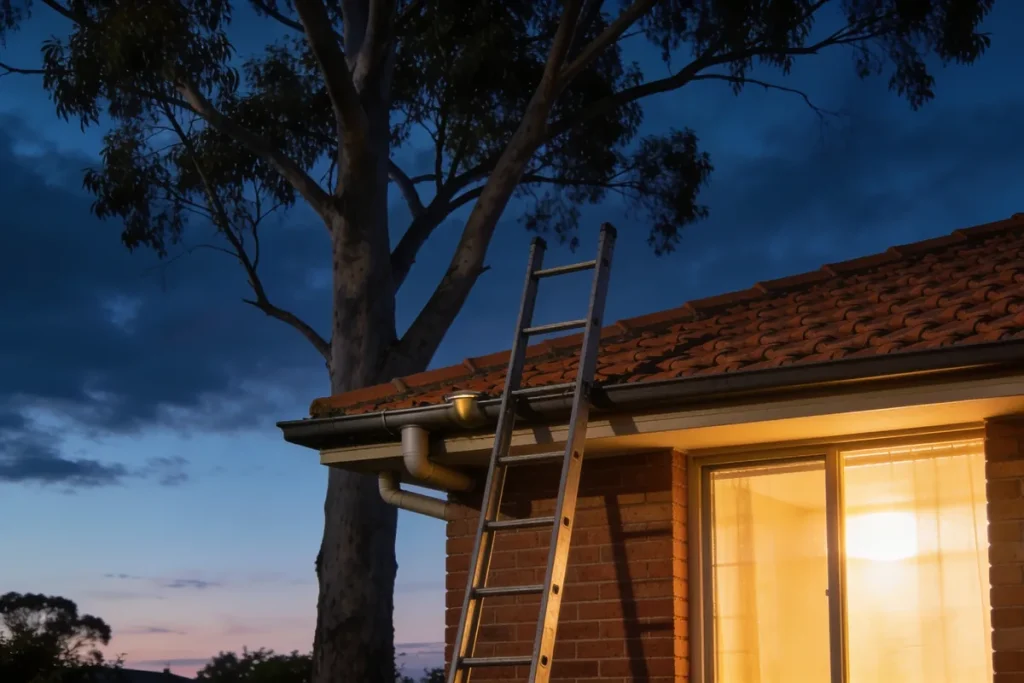
The thumping starts a little after dark and comes back again before dawn. A week or two later there is often a smell in the hallway, and sometimes a brown stain spreading across the ceiling plaster under the spot where the noise is loudest. The instinct is to catch the animal, put it in the car and let it go in a patch of bush on the edge of town. That drive is the step most likely to put a householder on the wrong side of the law. Possums are protected native animals, and the three state governments whose rules are set out below each cap the distance a captured possum may be moved at a figure measured in metres. The short helper that follows sorts out who may deal with the animal, depending on where the reader lives.
Possum in the roof: who can deal with it?
Three quick questions. The answer depends on your state.
Answer the questions and your summary will appear here.
Possums are protected, and the rules change at the border
Brushtail possums are protected native animals, so the question of who may handle one has a legal answer before it has a practical one. That answer depends on the state. New South Wales, Victoria and Queensland have each published guidance for householders with a possum in the roof, and the three documents agree on the principle while differing on most of the details that matter at two in the morning.
In New South Wales, NSW Environment and Heritage states that it is illegal to trap, or to catch and release, a possum without a licence. The work is done by catch-and-release operators licensed by the Biodiversity and Heritage Regulator. A householder in Newcastle or western Sydney who sets their own trap is outside the rules before any question of distance comes up.
Victoria is more permissive. Under a Governor in Council Order, residents and land managers may trap brushtail possums that are living in buildings, provided the trap is one that will not injure the animal. The order is written for brushtails, which matters for a household that cannot yet tell which species is upstairs.
Queensland takes a third route. Its guidance places possum removal with pest controllers who are licensed to use harmless traps.
Outside those three states, the reader’s own state or territory wildlife agency is the authority, and it should be called before any trap goes into the roof.
How far it can go
Distance is where the three sets of rules part company most sharply, and it is the figure most householders have never been told.
| State | Who may trap | Release rule |
|---|---|---|
| New South Wales | A licensed catch-and-release operator | At dusk, no more than 150 metres from where it was caught, near something it can climb |
| Victoria | Residents and land managers (brushtails in buildings, under the Order), or a licensed wildlife controller | On the same property, within 50 metres; moving it further, or off the property, is prohibited |
| Queensland | A pest controller licensed to use harmless traps | Within 25 metres of where it was caught |
The Victorian figure tends to surprise people most. A possum caught in a Ballarat roof is released on the same block, within 50 metres of the trap, which leaves it a short walk from the eaves it was living under.
The reasoning behind these limits is set out on the Queensland page. Possums are territorial, and one dropped into another possum’s patch is at risk of being killed by the resident animal. The long drive to the bush is prohibited, and it is also likely to end badly for the possum.
For the householder, the arithmetic is simple and a little deflating. The animal will be released close enough to find its way back, so removing it may buy no more than a night or two. The durable part of the job is the hole it came in through, and that is where the effort and the money should go.
Finding the way in
The Queensland Government suggests a test that costs nothing. During the day, push loose balls of paper into each gap that might be an entry point. After dark, check which ones have been pushed out. The gap with the missing paper is the one in use.
Knowing where to look shortens the search. The NSW guidance names roof cavities, chimneys and drainpipes among the places possums get into and shelter. On a typical suburban roof, the gaps worth filling with paper are usually these:
- loose or cracked ridge capping along the top of the roof
- lifted, slipped or broken tiles
- gaps in the eaves, particularly where the lining meets the fascia
- openings around downpipes and other pipes
- any point where an overhanging branch reaches the roofline
The last item is a bridge rather than a hole. A branch over the gutter gives a possum an easy route onto the roof, and cutting it back removes that route regardless of what happens at the entry point.
One caution applies to older houses. Eave linings and some older roofing materials may contain asbestos sheeting, so an unfamiliar lining should not be cut, drilled or prised open to fit a flap. The site’s guide to what asbestos work a householder can legally do sets out where that line sits.
One-way doors, and sealing at the right time
Once the entry point has been found, NSW and Victoria both point to the same device: a one-way door or flap fitted over the opening, which lets the possum out to feed and stops it getting back in.
Timing is the part that goes wrong. NSW advises blocking access only when the householder is sure the possum has left to feed, which usually happens at night. Sealing a roof with the animal still inside traps it, and that creates a worse problem within days than the one being solved.
The Victorian guidance adds two construction details. The flap should be hinged at the top, so that it swings outward and falls shut behind the animal, and the surrounds should be covered in metal so that claws cannot grip the edges and lever them open. Queensland adds a step for after the possum has gone: soak the old entry with a strong-smelling disinfectant, so that the scent no longer tells the animal it is home.
If the thumping returns a few nights later, the NSW reading is direct. There is another way in, and the paper test starts again on the remaining gaps.
The flap is a temporary device. When the roof has been quiet for several nights, the opening needs a permanent repair, and on a tiled roof that is often work for a roofer.
Choosing who to call
In NSW and Queensland, and for any Victorian who would rather not handle a trap, the job goes to a professional. Operators differ in what they include, so the comparison is best made on scope, with five questions asked before anyone climbs a ladder.
- Do you hold a current licence or permit for this state? In NSW the operator should be licensed through the Biodiversity and Heritage Regulator; in Queensland, licensed to use harmless traps.
- Where and when will you release it? The answer should match the state rule: at dusk within 150 metres in NSW, on the property within 50 metres in Victoria, within 25 metres in Queensland. An operator who mentions a reserve across town has given the wrong answer.
- Do you seal the entry, or only remove the animal? Removal on its own is half the job.
- Is a return visit included to take the one-way door off? The flap has to come off before the permanent repair goes on.
- Who repairs the tiles or ridge capping? Some operators handle minor repairs; others will refer the work on.
Licensed catchers on the directory are listed under pest control, and the roofing and guttering listings cover the repair half of the job. This guide gives no price figures, because no reliable published source for them exists. Two or three written quotes measured against the five questions above will tell the reader more than an average would.
Babies, injured possums, and rentals
A possum with young, or one that appears injured, changes the plan in every state. The right call is the local wildlife rescue service, before any trap or one-way door goes near the roof.
Renters face a different question. The roof belongs to the landlord, and sealing it is a repair to the building. A tenant should tell the landlord or agent in writing, noting the noise, any smell or ceiling stain, and the date it started, and keep a copy. A written notice records when the problem was reported, which helps if the repair is slow to arrive.
Seal the Roof, Not the Deal
The rules reduce to three numbers and a sequence. In NSW, only a licensed operator may catch a possum, and it goes back out at dusk within 150 metres. In Victoria, a resident may trap a brushtail living in a building, with a trap that will not injure it, and release it on the same property within 50 metres. In Queensland, a licensed pest controller uses a harmless trap and releases the animal within 25 metres. In all three, the possum stays in the neighbourhood. The lasting fix is to find the entry, let the animal leave at night, and close the hole behind it. When comparing operators, the useful question is whether the quote covers that last step.
Sources: NSW Environment and Heritage, How to remove a possum from your roof, 2026 (https://www.environment.nsw.gov.au/topics/animals-and-plants/native-animals/living-with-native-animals/how-remove-possum-your-roof); Victorian Government, Brushtail possum wildlife management methods, 2024 (https://www.vic.gov.au/brushtail-possum-wildlife-management-methods); Queensland Government, Removal of snakes, possums and pests, 2026 (https://www.qld.gov.au/environment/plants-animals/animals/living-with/removal)