
Garage Door Repair: The Spring You Leave Alone and the Quote Worth Questioning
- Home Services
-
Oct 22
- Share post
 Fiona Delaney
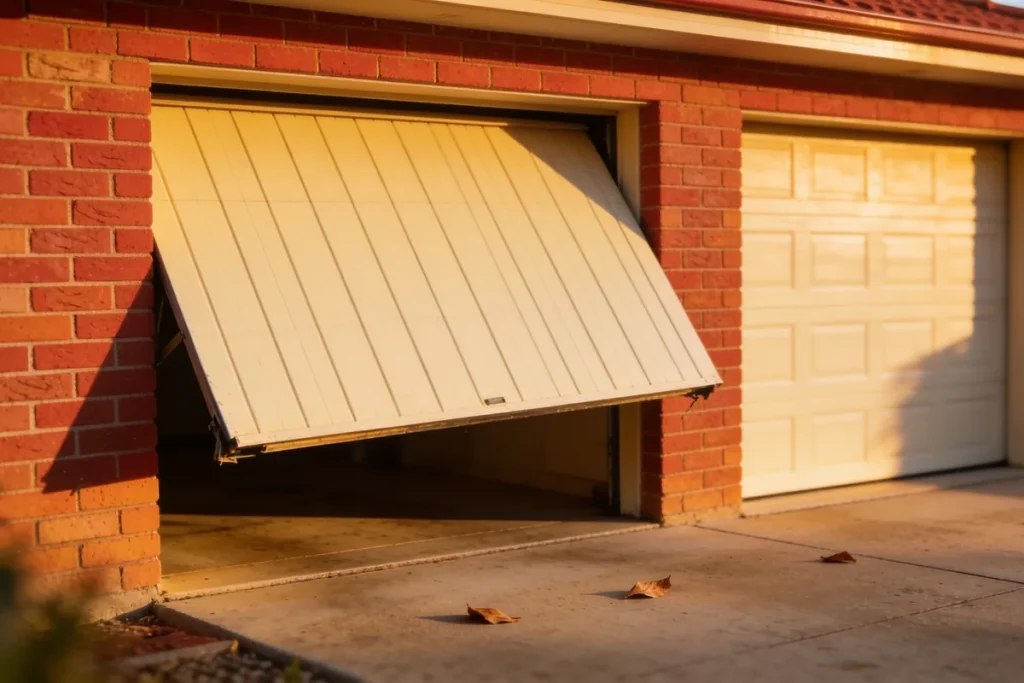
It’s a weekday morning, you’re already running late, and the garage door has stopped a third of the way up and won’t go any further. Maybe it groaned first. Maybe there was a bang in the night that you put down to the cat. Either way, the car is on the wrong side of it, and someone helpful is probably already telling you to grab the vice grips. Take a breath before you do. Most of what goes wrong with a garage door is small and fixable, and some of it you can check yourself in a few minutes. One part, though, is not a do-it-yourself job, and a good technician will tell you which part that is and why, without trying to sell you a whole new door.
Torsion or extension: which springs you have
Garage doors are heavy, and the springs are what make them feel light. They carry most of the door’s weight so the opener, or your arms, only have to do a small share of the lifting. It helps to know which kind you have before anyone quotes you.
Steel-Line, an Australian garage door maker, describes the two main types in its guide to springs. Torsion springs twist. They sit on a shaft above the door, and as the door closes they wind up, storing the energy that helps lift it again. Extension springs stretch. They run along the tracks beside the door and extend as it moves. In Steel-Line’s own range, torsion springs are used on sectional doors (the kind that roll up in panels along a ceiling track) and extension springs on tilt doors (the one-piece kind that swing up and out).
Roller doors, the type that coils up into a drum above the opening, have their own spring mechanism inside that drum. You won’t usually see it, and that’s fine. You don’t need to name every component. You only need to know roughly what’s up there so you can follow what the technician tells you.
If you’re not sure what you have, stand inside the garage with the door closed and look up. A spring on a bar above the door is torsion. Springs running beside the tracks are extension. Nothing visible and a drum at the top usually means a roller door.
Why the spring is the part you leave alone
Steel-Line’s guide is plain about this. It says springs are under extreme tension, and its advice is to never attempt DIY replacement.
It helps to picture what that tension means. A torsion spring is wound tight every time the door comes down, holding enough stored energy to help lift the full weight of the door. If it’s loosened, adjusted or disconnected the wrong way, that energy goes somewhere all at once, through the spring, the cables, the bars and whatever happens to be in the way. And when a spring has already broken, the door is no longer properly balanced. The weight that the spring used to hold is now sitting on the opener, the cables or whatever is holding the door in place, and a door in that state can come down suddenly.
So if your door is stuck and you suspect a spring, it’s okay to stop there. Leave the door where it is, keep children, pets and cars clear of the opening, and make a call. You might feel a bit silly ringing someone about a door, but calling is the sensible thing to do here, and a good technician would much rather you did.
Signs a spring is going, and how long they last
Springs rarely fail without warning, so it’s worth knowing what the early signs look like. Steel-Line lists these:
- the door feels heavy, or doesn’t respond to the opener the way it used to
- it closes quickly, or unevenly, with one side lower than the other
- you hear loud bangs, especially when the door is moving
- you can see gaps between the coils of a torsion spring
- there’s rust or corrosion on the springs
Springs also wear out with use. Steel-Line’s guide puts the life of a torsion spring at 15,000 to 20,000 cycles, and an extension spring at 10,000 to 15,000 cycles, where one cycle is the door going up and coming back down. Those are a maker’s figures for its own springs, so treat them as a rough guide.
The useful bit is the arithmetic. A door that opens once in the morning and once in the evening wears slowly. A door that the whole household uses as the front door, in and out a dozen times a day, can use up its springs much faster. If that sounds like your house, don’t be surprised if your springs seem to go sooner than a neighbour’s.
The opener: what you can check yourself
Sometimes a “broken” garage door turns out to be a problem with the opener, so here are a few gentle checks you can do before anyone arrives.
The remote. Try the wall button if you have one. If the door works from there but not from the remote, a flat battery is the likely culprit, and it’s an easy swap.
The power. Check the opener is plugged in and the power point is switched on. It sounds obvious, but it’s an easy one to miss when you’re in a hurry.
The manual release. Most openers have a release cord, often with a handle, that disconnects the door from the motor. Only use it if you’re confident the springs are intact. If they are, release it and check whether the door runs freely by hand. If it feels very heavy, sticks, or wants to drop, stop and let a technician take it from there.
The safety sensors. If your opener has photo-eye sensors near the floor, check nothing is blocking them and that they haven’t been knocked out of line.
If the fix turns out to need a new power point or some hard-wiring for the opener, that’s a different trade. In NSW, electrical wiring work needs a licensed electrician regardless of the cost of the job, so it isn’t something to tack onto the garage door visit unless the person doing it holds that licence. The directory’s electricians are listed separately for exactly that kind of job.
Reading the repair quote
This is where it’s worth slowing down, because a spring diagnosis can be explained clearly, or it can be used as a lever.
A fair diagnosis tends to sound specific. The technician tells you which spring has failed and why: it broke, it’s the wrong weight for your door, or it has simply worn out. If your door has two springs and they recommend replacing both as a pair, they explain why, so you can weigh it up rather than just nod along. The quote lists the parts separately from the labour, so you can see what you’re paying for. And it includes a balance and safety check after the work, so the door is left running properly, not just moving.
A few things are worth gently questioning:
- no written quote, or a price given only out loud
- pressure to replace the whole door on the spot, before you’ve had time to think
- a price that changes once the door is open, without a clear explanation of what was found
None of these always means something’s wrong, but they’re good moments to ask more questions or get a second opinion.
It also helps to know your rights. The ACCC explains that consumer guarantees apply automatically, including that services must be provided with due care and skill, and that a business can’t take those rights away. A warranty on parts or labour is an extra promise on top of them.
And if the job grows into a full door replacement, check the paperwork. In NSW, residential work worth more than $5,000 including GST needs a written contract and a licensed contractor.
Choosing the technician
When you ring around, these questions will tell you a lot in a short call:
- Are you licensed where my state requires it, and can you put the number on the quote?
- If the opener needs wiring or a new power point, will that be done by a licensed electrician?
- What warranty do you give on parts, and what on labour?
- Can I see the old springs once they’re out?
That last one is a small thing, and a confident technician won’t mind it at all. You’ll find local businesses under the directory’s garage doors listings, and if the job turns into replacing a side or pedestrian door as well, the door listings are a good place to start.
Let the Spring Be Someone Else’s Problem
If your door is stuck, start with the easy checks: the remote battery, the power, the sensors. Leave the springs alone, whatever anyone suggests, because they hold a great deal of stored tension and the maker’s own advice is not to touch them. When you call a technician, ask which spring failed and why, get the parts and labour written down separately, and make sure the door is balanced and safety-checked before they leave. It’s a smaller job than it feels at eight in the morning, as long as the right person does the risky part.
Sources: Steel-Line Garage Doors, Torsion vs extension garage door springs, 2026 (https://www.steel-line.com.au/torsion-vs-extension-garage-door-springs-whats-the-difference-and-which-door-uses-which/); NSW Government, Electrical work licences, 2026 (https://www.nsw.gov.au/business-and-economy/licences-and-credentials/building-and-trade-licences-and-registrations/electrical); ACCC, Consumer rights and guarantees (https://www.accc.gov.au/consumers/buying-products-and-services/consumer-rights-and-guarantees)