
Comparing Landscaper Quotes Line by Line, From the Design Fee to the Retaining Wall
 Hamish Ogilvie
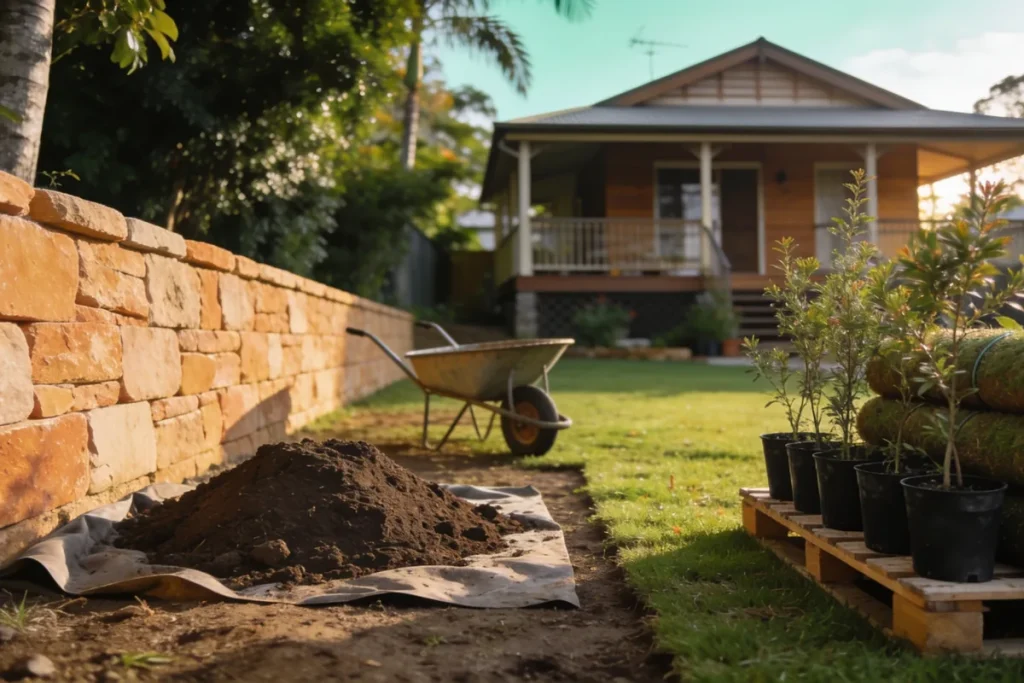
A typical backyard job produces three quotes in three formats. The first is a single lump sum with a paragraph of description underneath. The second breaks the job into stages and prices each. The third arrives a week later, prices most of the work and lists the plants as “TBC”. None of the three is wrong, and none of them can yet be compared with the others, because each describes a slightly different job in a different order. The task before choosing a landscaper is to make the three quotes describe the same yard. The sheet below is built for that: one row per line item, one column per quote, and a column that records whether each item is included, left out, or priced as an allowance.
Landscaping quote comparison sheet
Enter each quote's price for every line. In the last column, note Y (included), N (not included) or A (allowance) for each quote, for example "A: Y, B: N, C: A". Leave a price blank if the quote does not cover that line.
Compare totals only once the Y/N column matches across all three.
Designer, contractor, or both
The first difference between quotes is often who is quoting. Three kinds of business answer a request for a landscaping quote, and they price different things.
A landscape designer draws the plan. The design fee covers the site visit, the concept, the drawings and, depending on the firm, a planting schedule and a materials list. A designer may not build anything.
A landscape contractor builds. A build-only quote prices the labour, machinery and materials needed to turn a plan into a yard, and it assumes someone has already decided what the yard should be. Where no plan exists, the contractor either works from a conversation on site or leaves those decisions to the client as the job proceeds.
Design-and-build firms do both, and their quotes often look dearer on the total for that reason. The comparison only holds once the design work is counted on both sides. When a build-only quote is lower by roughly the cost of a design, the saving usually means the design work has moved to the client, or to a decision made on the day by whoever is holding the shovel.
The sheet’s first row, “Design fee / plans”, exists to make that visible. If one quote includes drawings and the others do not, either add the cost of a design to the build-only quotes or ask those contractors what they would build from. The directory’s landscaping listings include businesses of all three kinds, and the quote itself should say which kind is quoting.
Ask for the quote in stages
A lump sum cannot be compared line by line, so the most useful request a client can make is for each landscaper to quote in stages, in the same order. The stages a comparable quote names are these, and they are the rows of the sheet:
- Design fee or plans, where the firm provides them
- Site preparation, demolition and rubbish removal, including old paving, structures and green waste
- Excavation and spoil removal, and where the spoil goes
- Drainage, including where the water is directed
- Retaining walls, with height and material noted
- Paving, paths and steps
- Decks, pergolas and other structures
- Soil, mulch and edging
- Plants, by species, pot size and number
- Turf
- Irrigation
- Lighting, and whether an electrician is doing the wiring
- Clean-up, and the maintenance period after handover
Two kinds of line deserve the closest reading. The first is “TBC”. Plants marked to be confirmed are a blank cell, and a total that leaves a blank cell is not a total. The second is the “allowance”: a sum set aside for an item whose final cost is not yet known, such as plants, a material yet to be chosen or a quantity of fill. Allowances are legitimate, and on some items unavoidable, but the final bill can move by however far the allowance was set below the real cost. Record each allowance in the sheet’s last column so it is not mistaken for a fixed price.
The maintenance period matters more than its usual position at the bottom of the page suggests. New plants and turf need watering and attention for their first weeks, and a quote should say who provides it and for how long. For the longer term, the directory’s gardening listings cover ongoing maintenance once the landscaper has handed over.
The structural line and the licence
Once the job includes a wall, a deck or a pergola, the quote crosses into licensed building work, and the thresholds are set state by state.
In New South Wales, structural landscaping needs a contractor licence where the labour and materials are worth more than $5,000 including GST. The NSW Government’s description of that work covers retaining walls that are not part of a habitable building, fencing, driveways, paths and paving, pergolas, decks and non-habitable shelters, and some water features. Many backyard jobs include at least one of them, so the threshold is worth checking against the quoted figure for that work.
In Queensland, the QBCC requires a licence for building work valued at more than $3,300, with an exemption that covers design work by landscape gardeners. That exemption is written for design work, so whoever builds the wall is a separate question for the licence check.
In Victoria, Consumer Affairs Victoria states that registration is required for domestic building contracts worth more than $10,000.
Some walls and decks also need approval from the council or a certifier, depending on their size, position and the site. This guide sets no height rule, because the rules vary and depend on the site. The question for each landscaper is direct: does any part of this job need approval, and who arranges it? Record the answer in the sheet alongside the retaining wall and structure rows.
Access, spoil and the hidden hours
Site conditions explain a large share of the spread between quotes, and the item rarely appears as a line of its own. Four questions bring it out:
- Can a machine get in? A side path too narrow for an excavator means digging and carting by hand, which changes the labour figure considerably.
- Where does the soil go? Excavated spoil has to be removed or reused, and removal means trucks or skips.
- Who pays for skips and tipping? One quote may include them while another lists them as extra.
- What happens if they hit rock or old concrete? Buried footings, old slabs and rock are common on established blocks.
The last question leads to the variations clause. A quote should state how extra work will be priced and require that any variation be agreed in writing before it is done. A variation agreed on site and recorded nowhere tends to reappear on the final invoice at a figure nobody discussed.
Contract, deposit and payments
In New South Wales, the rules for residential building work apply to structural landscaping. A job worth more than $5,000 needs a written contract. The deposit can be no more than 10 per cent. Where the contract exceeds $20,000, the contractor must provide a Home Building Compensation certificate before taking any deposit, and the client has a cooling-off period of five clear business days. These are the same deposit and contract rules that apply to a bathroom renovation, which is a useful comparison for anyone who has been through one.
Progress payments should be tied to stages completed, not to dates on a calendar. A schedule that asks for half the price once excavation is finished pays for work that has not yet been done.
Before signing, ask for the business’s ABN and licence number to appear on the quote, then check the licence on the state register. The sheet’s last two rows record those checks, because a fully priced quote from an unlicensed contractor is not a comparable quote at all.
Reading the sheet
With three columns filled in, the order of reading matters.
Start with the “Included?” column, not the totals. Any row where one quote says Y and another says N or “allowance” is a row where the three are pricing different jobs. Resolve those first, by asking the landscaper to price the missing item or confirm it is excluded.
Then check the scope inside each row. Two quotes may both include a retaining wall, at different heights or in different materials. Two may both include plants, in different numbers or pot sizes. The notes in each cell should make that visible.
Only then compare the totals. The lowest figure on day one is often the one that left something out, and drainage is an easy item to leave out, because nobody sees it once the turf is down. A quote without drainage is pricing a different yard from the other two, and the missing line tends to come back as a problem later.
Same Yard, Same Scope, Then Compare
Three landscaping quotes can only be compared once they describe the same yard. Ask each landscaper to price the job in stages, in the same order. Treat “TBC” as a blank and every allowance as an estimate. Check the licence once the job includes a wall, a deck, paving or a pergola, and get the contract, deposit and variations in writing. Then fill in the sheet, resolve every row where the three disagree, and read the totals last.
Sources: NSW Government, Structural landscaping work, 2026 (https://www.nsw.gov.au/business-and-economy/licences-and-credentials/building-and-trade-licences-and-registrations/structural-landscaping-work); NSW Government, Contracts for residential building work, 2026 (https://www.nsw.gov.au/housing-and-construction/building-or-renovating-a-home/preparing/contracts); QBCC, When you need a licence (https://qbcc.qld.gov.au/licences/start-your-career/when-you-need-licence)
Pool Fence Inspection: The Certificate Needed | OZ Directory
27 October 2026 at 11:10 am[…] may not pass now. Where garden beds and hedges sit close to the fence, the site’s guide to comparing landscaper quotes is useful if the planting needs to be moved or redone. Boundary fences deserve particular attention […]