
Security Screen Doors: The Australian Standard Behind the Price
- Home Services
-
Oct 25
- Share post
 Fiona Delaney
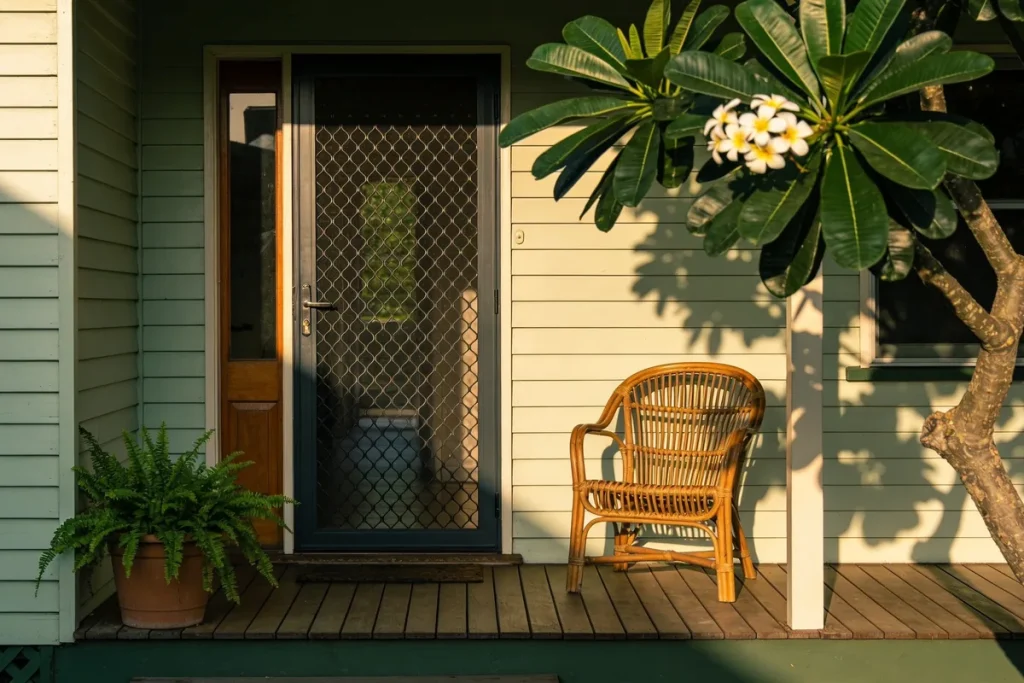
It’s the kind of summer evening when the house has held the day’s heat and the only thing that helps is opening the front door to whatever breeze is going. You’d love to leave it open while you get dinner on. But there’s that small worry at the back of your mind about who could walk up the path while you’re down the other end of the house. That’s usually when people start looking at security screen doors, and it’s usually not long before two quotes arrive for the same front door, one a fraction of the other, and both calling the product a “security door”. They can’t both mean the same thing. The difference is mostly written in one line of the quote, and it’s worth knowing how to read it.
Screen door, security door: the difference
A screen door keeps the insects out. Put a lock on it and you’ve got a screen door with a lock, which is better than nothing, but it isn’t the same as a security door. A security screen door is built and tested to resist someone trying to get through it.
When you’re looking at one, there are four parts to think about.
The frame. This is what everything else hangs off. A light frame can flex or be prised away, however good the mesh is.
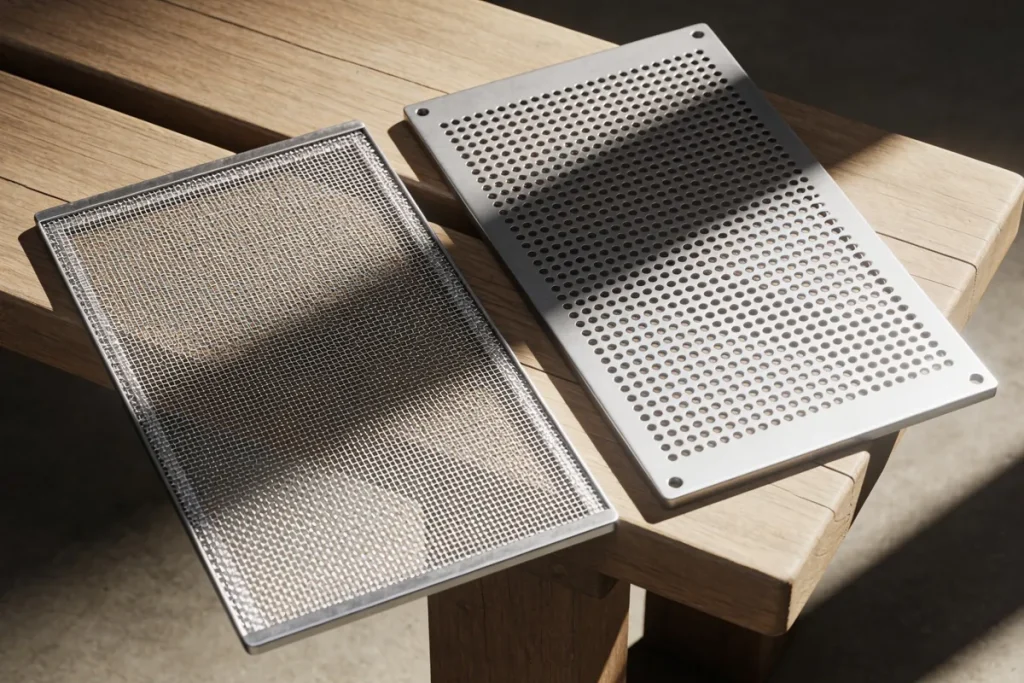
The infill. This is the bit you look through. The common types are woven stainless steel mesh, perforated aluminium (a sheet with small round holes punched through it) and the traditional grille. They look and feel quite different, so it’s worth seeing a sample before you choose. Mesh and perforated sheet both let the breeze through, which is the whole point on a hot night, but they look different from the street and from inside. Some people find fine mesh easier to see through; others like the more solid look of perforated aluminium. That part is a matter of taste. Whether the infill, frame and lock have been tested together is not, and that’s where the standard comes in.
The lock. A single-point lock holds the door at one spot. A three-point lock holds it at three, along the lock side.
The hinge side. It’s easy to forget, but a door can be attacked from the hinges as well as the lock, so it matters how they’re fixed.
A security door is one part of keeping a home safe, and it sits alongside things like alarms, cameras and sensor lights. If you’re thinking about the bigger picture, the directory’s security and safety system listings are a good place to look at the rest.
The standard, and why the number changed
For years, the reference point for security screen doors in Australia was AS 5039-2008. If you’ve looked into this before, that’s probably the number you remember. It has since been replaced. Standards Australia’s catalogue now lists the security door and window screen standard as a series:
- AS 5039.1:2023 covers classification and performance
- AS 5039.2:2024 covers installation
- AS 5039.3:2023 covers the methods of test
Those replaced the older AS 5039-2008, AS 5040 and AS 5041, so you may still see the old numbers on older products or in older brochures.
So the most useful question you can ask a supplier is a simple one: which standard, and which edition, was this product tested to? Then ask to see the certificate or test report. If the paperwork only mentions AS 5039-2008, ask whether the door has been tested to the current series, and what that means for the product in front of you. A business that sells tested doors should be able to show you that paperwork without any fuss. If the answer is vague, or the word “standard” appears on the brochure with no number beside it, that tells you something too.
When you do see a test report, you don’t need to read every page. Look for the product name or model, so you know it’s the door you’re actually being quoted for, then the standard and its edition, and who did the testing. If the report is for a different product, or the supplier can only point you to a sticker, ask again. It’s a fair question, and it’s your front door.
What the tests try to do
You don’t need to understand the testing in detail, but it helps to know it’s there, because that’s a big part of what the higher price buys. The current AS 5039 series covers classification and performance, installation, and the methods of test, and the methods of test have a part of their own, AS 5039.3. A tested door has been put through those methods to see whether it stands up to someone trying to get through it.
A screen door with a lock hasn’t been through any of that. That’s really the whole difference between the cheap quote and the dear one, if the dear one is for a tested door. It also explains why two doors that look almost identical in a showroom can be priced so far apart. The testing, and the frame and lock that let a door pass it, aren’t things you can see from the hallway.
Installation decides it
Here’s the part that surprises a lot of people: a tested door is only as strong as the way it’s hung. That’s why installation has its own part of the standard. Hanging a door is easy enough. Hanging one well, so it stays square and solid for years, is a different skill, and it’s the one you’re paying the installer for.
A good installation comes down to a few things. The fixings go into solid framing, not just the trim around the opening. Where the door frame and the house frame don’t meet neatly, the gap is packed so the frame sits firm and square. The lock strike is fixed properly so the lock has something solid to bite into. And the gaps around the door are tight enough that nothing can be slipped in to work at the lock.
When you’re talking to an installer, ask how they’ll fix the frame to your particular doorway. A brick opening, a timber frame and an old house with a bit of movement in it don’t all take the same approach, and someone who has fitted plenty of these should be happy to talk you through it.
It’s also worth knowing that changing a tested door, such as cutting a pet door into it, means it’s no longer quite the door that was tested. If you need a pet door, talk to the supplier before anything gets cut.
Measuring matters too. Doorways in older houses often aren’t quite square, and a door made to the wrong size is hard to fit well afterwards. If the supplier offers to send someone out to measure, I’d let them.
While you’re thinking about the doors on your house, don’t forget the big one. The site’s guide to garage door repairs and the springs to leave alone covers the other door that often gets overlooked.
Reading two quotes side by side
When the quotes are on the table, try lining them up against these points. They’ll tell you whether you’re comparing the same door.
- The standard and edition. Is it named, with the edition, and can they show you the certificate or test report?
- The infill. Stainless steel mesh, perforated aluminium or grille, and which grade if they offer more than one.
- The lock. Single-point or three-point.
- Who measures and who installs. Is it the same business, their own staff, or a subcontractor?
- The warranty. Ask what’s covered on the product and what’s covered on the installation, because they’re often different.
If one quote is a lot cheaper, go down that list and see where it parts company with the other. Maybe the standard isn’t named, or the lock is single-point where the other is three-point, or installation is priced separately. Sometimes the cheaper quote really is the better deal, and that’s lovely when it happens. You just want to know you’re comparing the same door before you decide.
To show how that works, here’s a made-up example. Say Quote A reads “security screen door, black, supplied and fitted”, and Quote B names the AS 5039 series and its edition, woven stainless steel mesh, a three-point lock, installation by the business’s own staff, and separate warranties on the door and the fitting. Quote A is much cheaper. Going down the list, Quote A doesn’t name a standard, the lock type or who installs. That doesn’t prove it’s a lesser door, but it does mean you’d need to ask a few questions before you could compare the two fairly. If the supplier comes back with a certificate and the missing details, you can weigh them up properly. If they can’t, you’ve got your answer.
Licensing rules for security door installers depend on where you live, so check with your state’s licensing body before you sign. You’ll find local suppliers and installers under the directory’s door listings, and it’s worth getting at least two quotes so you have something to compare.
A couple of questions people ask
Can I hang a security door myself? Plenty of people wonder. Hanging a door is easy enough, but hanging one well is a different skill, and installation has its own part of the standard. The licensing rules for installers in your state are worth checking too, before you decide.
Mesh or perforated aluminium? That one’s up to you. Both let the breeze through, and the choice mostly comes down to how each looks from the street and from inside. Ask to see a sample of each. What matters more is that the frame, infill and lock have been tested together.
What to Hold Them To
If you’re paying for a security screen door, hold the supplier to a few simple things. Ask which standard and edition the door was tested to, and ask to see the proof. Make sure the quote names the infill, the lock and who’s installing it. Check the installer is licensed where your state requires it, and get the warranty on both the door and the installation in writing. None of that is rude to ask, and a good supplier will expect it. Then you’ll know your front door is doing more than keeping the flies out, and you can leave it open on a warm night with a bit more peace of mind.
Sources: Standards Australia, AS 5039.1:2023, AS 5039.2:2024 and AS 5039.3:2023 Security door and window screens (https://store.standards.org.au/product/as-5039-1-2023)