
Car Will Not Start? Auto Electrician or Mechanic, and Which One to Call First
- Automotive
-
Oct 24
- Share post
 Marco Pellegrini
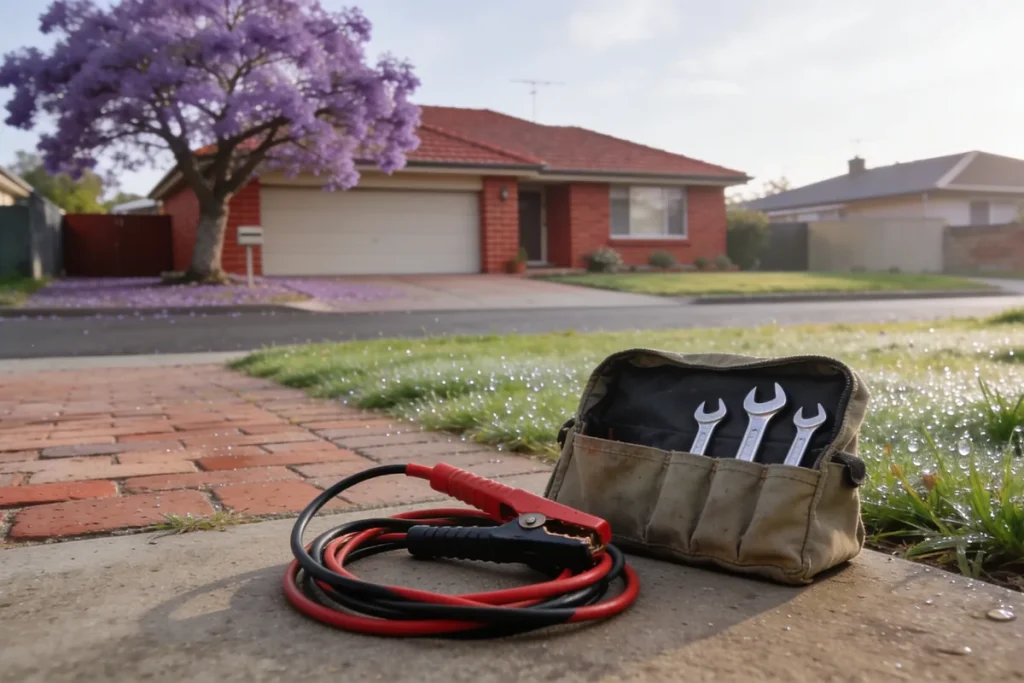
It is a quarter to eight on a Tuesday in a street of brick bungalows somewhere between the parklands and the hills, and a car in one of the driveways will not go. The key turns. The dash lights come up the way they always do, the radio clears its throat, and then there is a click from somewhere under the bonnet. One click, or a fast rattle of them, and nothing else. The engine does not turn over. Next door, someone reverses out on time.
Most of us know this moment, and most of us reach for the phone with two numbers in mind: the mechanic who does the service every year, and an auto electrician we found once and never needed again. Either one might be the right call. Which one you ring first decides how long the car sits in the driveway, whether it gets towed somewhere it did not need to go, and how many times you pay someone to look at it. Luckily, the car usually tells you a fair bit before anyone opens the bonnet, if you know what to listen for.
What each trade actually does
An auto electrician works on the parts of a car that run on current. That means the starting system (the battery, the starter motor and the circuit between them), the charging system (the alternator and what it feeds), the wiring looms that run through the whole car, and the growing list of electronic faults that come with modern vehicles: sensors, modules, warning lights that will not go out. Auto electricians also fit accessories, from driving lights to a second battery in a four-wheel drive. Ask one what the hardest part of the job is and you will rarely hear “fitting”. The real skill in auto electrical work is fault finding. Bolting in a new part is the easy bit; working out which part has actually failed is what you are paying for.
A mechanic works on the parts that move and burn. The engine itself, the fuel system, the mechanical side of ignition, cooling, the gearbox and the clutch, brakes and suspension. When you book a car in for a service, you are booking a mechanic. The directory’s listings for a mechanic cover that whole range, from the small suburban workshop to the larger service centre.
The line between the two is real, but it is not a wall. A modern engine is run by electronics, so plenty of mechanical faults show up as electrical symptoms, and the other way round. Many workshops do both kinds of work under one roof, with an auto electrician on staff or one they call in. So the question is less “which trade” than “which trade should look first”, and that comes down to the symptom.
Read the symptom first
Before you ring anyone, sit in the car for a minute and notice exactly what happens when you turn the key or press the button. Write it down if you can. What follows is not a diagnosis, and nobody can give you one from a description. These are likelihoods, the kind of sorting a good tradesperson does in their head when you describe the problem over the phone.
Rapid clicking, dash lights on. More likely electrical. A fast chatter of clicks often means the starter is getting some power but not enough to turn the engine. A flat battery is the commonest cause of a car that will not start, and this is one of the sounds it makes. A poor connection can do the same.
A single click, then nothing. More likely electrical. Something in the starting circuit is being asked to work and is not following through. An auto electrician would usually want to test the starter and the circuit feeding it.
A slow, laboured crank. Either. The engine turns, but reluctantly, as if it is wading. That can be a weak battery or a starter on its way out, but it is worth mentioning to whoever you ring, because the answer is not always electrical.
Cranks normally but will not fire. Either, and often the mechanic’s territory. The starter is doing its job and the engine is turning at a normal speed, but it never catches. Fuel and the mechanical side of ignition come into it here, though sensors and the security system are electrical, so this is a symptom where a workshop that does both is handy.
Nothing at all, no lights, no sound. More likely electrical. When the whole car is dead, the first suspect is the supply of power, before anyone thinks about the engine.
Starts, then dies. Either. The car fires, runs for a few seconds or a few minutes, and cuts out. There are electrical and mechanical explanations for this, and it is one to describe carefully, including how long it ran.
Warning lights. It depends on the light. A battery or charging light on the dash points towards the charging system, which is usually electrical work. An engine warning light can mean almost anything, and it needs a scan tool to read the stored fault before anyone can say which trade it belongs to.
If your symptom sits in the “more likely electrical” group, an auto electrician is a sensible first call. If it sits in “either”, ring a workshop that does both, or describe the symptom to whoever you call and ask whether it sounds like their job. A good tradesperson will tell you if it is not.
Mobile or workshop
A lot of auto electrical work comes to you. A mobile auto electrician can usually test a battery, a starter motor and an alternator in your driveway, and replace them there too, which saves you a tow for a job that can be done on the concrete. For the symptoms in the “more likely electrical” group, that is often the quickest route back on the road.
Some jobs cannot be done in a driveway. A car that needs to go up on a hoist, a fault that needs workshop equipment or a proper scan tool, a problem that turns out to be mechanical: those go to a workshop. If the car will not move under its own power, that means a tow, and the directory’s towing listings are the place to look when the car has to get to a workshop.
There is also an order of operations worth keeping in mind. If you are on a busy road, on the shoulder of a highway or somewhere that is not safe to wait, roadside assistance comes first, if you have it. Their job is to get you and the car somewhere safe. Diagnosing the fault properly can wait until the car is in a driveway or a workshop.
The diagnostic fee and what it should buy
This is where a dead car can turn into an expensive one. The complaint you hear most often is not about the fault itself. It is about paying someone to look at the car, driving away with the fault still there, and paying a second business to look again. Sometimes it is the same workshop twice. Sometimes it is a shop that did not so much diagnose the fault as guess at it, fit a part and hope.
You can head off a lot of that with three questions before anyone starts work.
What does the diagnostic fee cover? Ask what tests they will do for it and how long they will spend. A fee for “having a look” is harder to judge than a fee for testing the battery, the starter and the charging system.
Does the fee come off the repair? Some businesses deduct it if you go ahead with the work. Some do not. Either is fine, as long as you know before you agree.
Will I get the fault codes and test results in writing? This is the one that matters most. If a business reads stored fault codes or tests a component, ask for the results on the invoice or on a separate sheet. If the fault comes back, or you want a second opinion, that piece of paper means the next person does not start from scratch.
It also helps to know where you stand. Under the consumer guarantees the ACCC explains, a service has to be supplied with due care and skill. That does not promise every fault will be found on the first visit, but it does mean the work should be done properly, and a business cannot sign that right away.
Licences in NSW, and checking them
New South Wales is one of the states that licenses this work in detail, and the NSW Government’s page on working as a motor vehicle tradesperson sets it out. Automotive electrician and electrical accessory fitting are both classes of work that need a motor vehicle tradesperson certificate. Battery installation or replacement is treated as minor work and does not need a certificate, which is why you will see batteries fitted by businesses that do not do other electrical work. Trainees can do the work under the supervision of a certificated tradesperson.
The business itself is a separate matter. A business that does motor vehicle repairs in NSW needs a motor vehicle repairer licence. So there are two things to look for: the person doing the work holds the right certificate, and the business holds its licence. The NSW public register can be searched, so you can check both before you hand over the keys.
I live in South Australia, and the rules in the other states and territories are set by each state’s own licensing body. They are not the same as New South Wales, and I would not try to summarise them here. If you are outside NSW, look up your state’s licensing body and ask the business what licence or registration it holds.
Accessories and the second opinion
A dash cam wired into the fuse box, a set of driving lights on the bull bar, a dual battery system in the back of a four-wheel drive: these are all jobs for an auto electrician. They are also jobs that live on long after the person who fitted them has forgotten the details, so ask for the circuit and the fuse to be listed on the invoice. If something goes wrong with the wiring later, the next person will know where to start, and so will you. The same habit applies to the cameras behind the glass. The site’s guide to windscreen replacement and ADAS calibration makes the case for an invoice that shows exactly what was done, and the reasoning carries over to any accessory or camera work.
The second opinion is the other half of this. If a part was replaced and the fault came back, go back to the business that replaced it and ask what test showed that part was the problem. A starter motor that tested faulty is one thing. A starter motor that was replaced because it seemed likely is another. If they cannot show you the test, that is a fair moment to take the car, and the paperwork from the first visit, to someone else.
Before You Ring Anyone
The car in that Adelaide driveway is still clicking, so here is what to do before you pick up the phone. Note the symptom exactly: the clicks, the crank, the lights, how long it ran if it ran at all. Ask whoever you call what the diagnostic fee covers, whether it comes off the repair, and whether you will get the results in writing. And check the licence, both the tradesperson’s and the business’s, on your state’s register. Ringing the right trade first, with the symptom written down, is your best chance of paying for one visit instead of three.
Sources: NSW Government, Working as a motor vehicle tradesperson (https://www.nsw.gov.au/business-and-economy/running-a-business/industry-specific-business-requirements/working-as-a-motor-vehicle-tradesperson); ACCC, Consumer rights and guarantees (https://www.accc.gov.au/consumers/buying-products-and-services/consumer-rights-and-guarantees)
Car Transport Interstate: The Insurance Gap | OZ Directory
30 October 2026 at 12:39 pm[…] day can throw the whole booking out. If it’s been playing up, the site’s guide to whether to call an auto electrician or a mechanic is a good place to start working out who can […]