
Solar Panel Cleaning: When It Pays, and When the Rain Does the Job
 Marco Pellegrini
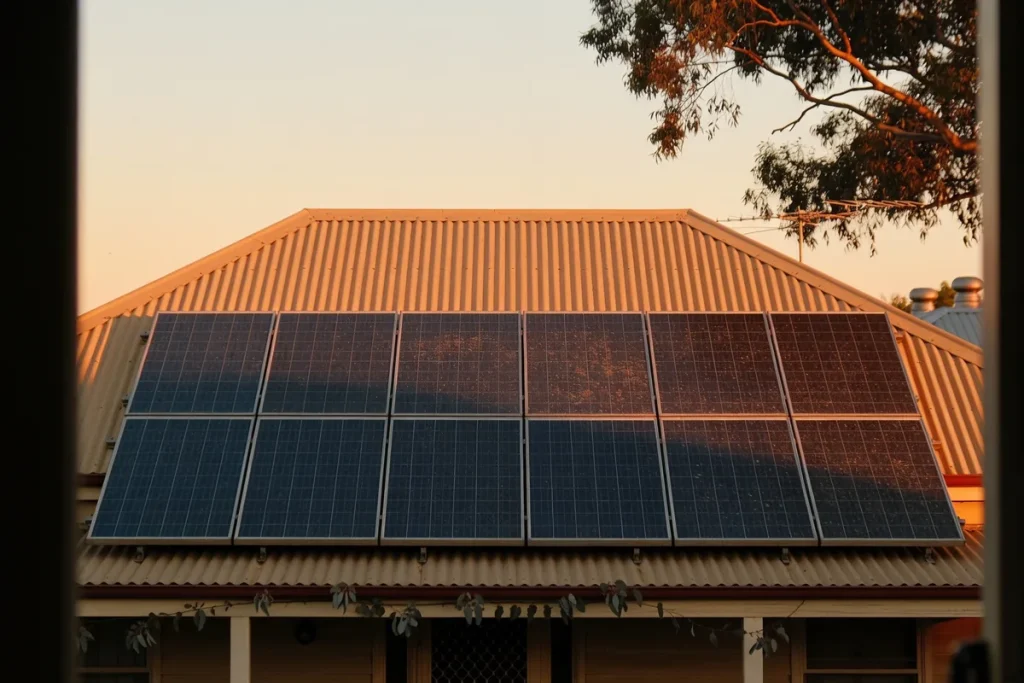
Walk down almost any street in the northern suburbs of Adelaide and count the roofs with panels on them. On some stretches you lose count. After a dry, dusty fortnight in summer they all look a little duller than they did in spring, and that is usually when the flyer turns up in the letterbox, or someone knocks on the door with a ladder on the ute and an offer to clean the lot by lunchtime. The pitch is always about lost power. The question nobody on the doorstep asks is whether your particular roof, at your particular angle, in your particular street, needs anything done at all. Sometimes it does. Quite often the next decent rain will do the same job for nothing.
What rain does and does not do
Solar Victoria has published a plain guide to cleaning and maintaining panels, and it is more relaxed about cleaning than the people selling it. Its advice is that dirt you cannot reach should wash off when it rains, as long as the panels are on an angle. Tilted glass sheds water, and the water takes most of the loose dust with it.
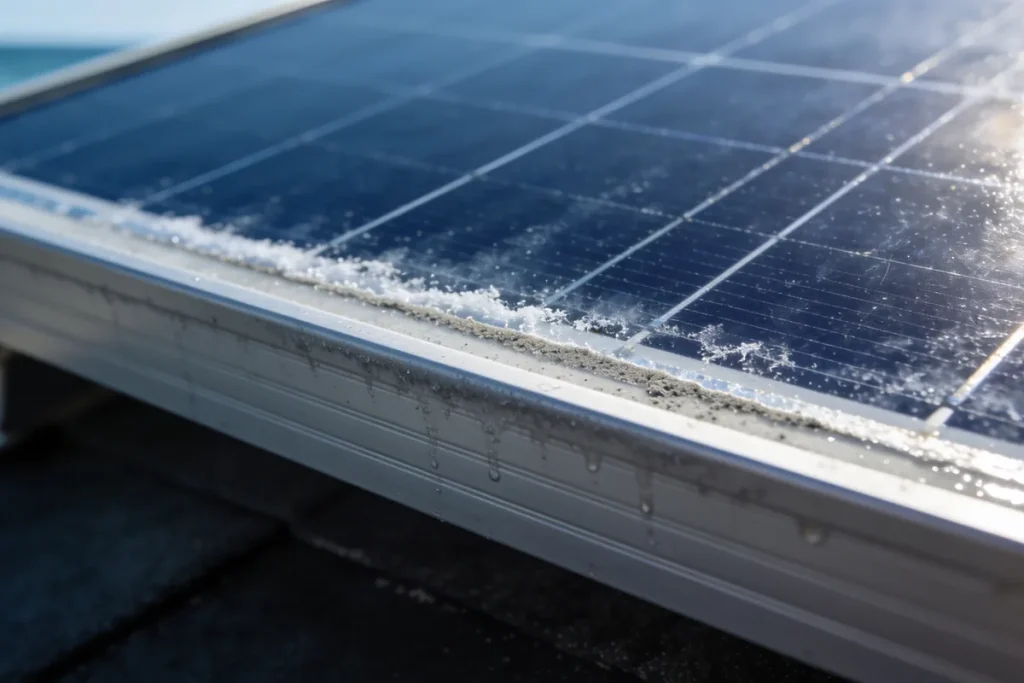
The exception it names is the flat panel. On a flat or nearly flat roof, rain does not run off the glass so much as sit on it. Water can pool on a flat panel, and when it dries it leaves a muddy mark behind. Do that a few times and you have a film that the next shower will not shift, because the next shower simply pools in the same place.
So the first thing to know about your own system is the angle. Panels mounted at a decent tilt on a pitched roof are, in most settings, looked after by the weather. Panels laid flat on a carport or a low skillion roof are a different case, and they are the ones most likely to benefit from a clean.
Settings that build up grime
Beyond the angle, it is the setting that decides it. Some houses are much more likely to need their panels cleaned than others, and it has little to do with how long the system has been up.
Near the coast. Salt spray dries on glass as a fine crust, and it does not always rinse off cleanly in light rain.
Birds. A roof that is a favourite perch, or a panel under a power line where birds sit, collects droppings that rain softens but rarely clears.
Low tilt. As above, the flatter the panel, the more likely it is to need help.
Dusty surroundings. Unsealed roads, nearby farms, quarries or industry put a steady film of dust in the air, and some of it settles on the roof.
Trees. Overhanging branches drop leaves, sap and blossom onto panels, and the same leaves tend to end up in the gutters. If that is your roof, the roofing and guttering listings cover the trades who clear and repair gutters.
Smoke. After a bad fire season, ash and smoke residue can settle on panels across a whole district.
None of these mean a house definitely needs its panels cleaned. Each one makes it more likely. A house with two or three of them, say flat panels near the beach under a gum tree, is a much better candidate than a pitched roof in a sealed suburban street.
Check before you pay
You do not need to climb anything to find out whether dirt is costing you power. Most systems come with an inverter app or a monitoring screen, and the useful comparison is this month against the same month last year. Seasons change output a great deal, so comparing January with June tells you nothing. Comparing January with last January, allowing for a cloudier or sunnier month, tells you a fair bit. A steady drop that is not explained by the weather or by new shade is worth a closer look. Write the figures down as you go; a few months of notes on the fridge will tell you more than any sales pitch.
Then look from the ground. Stand in the yard or across the street and look at the panels. Bird droppings are usually easy to spot. So is new shading from a tree that has grown since the system went in, which no amount of cleaning will fix.
What you should not rely on is a number from a flyer. I will not put a percentage here, because the honest answer is that it depends entirely on your roof, and anyone who quotes a gain before they have looked at your system is guessing.
How it should be done
If you decide the panels do need cleaning, Solar Victoria’s guidance on method is clear, and the first point is the most important: keep your feet on the ground. Its advice is to use a soft broom with a long handle and a light spray of water from the ground, and never a pressure hose. That rules out the most tempting tool in the shed, and it is the rule I would hold any cleaner to as well.
Where the panels cannot be reached from the ground, that is a job for a professional. Solar Victoria says professional cleaners should use full safety gear, and that they should not stand on the panels or place anything on them.
There is one more thing to read before anyone starts, and it is the least exciting document in the house: the installation manual for your panels. Look for what the manufacturer says about cleaning, including whether detergent can be used and what kind of water. A warranty can turn on conditions like these, so it is worth five minutes before anyone uses something the maker did not intend.
Hiring a cleaner
If you are paying someone, a short phone call should cover most of what matters.
Working at heights. Ask how they get onto the roof and what safety gear and systems they use. A cleaner who arrives with a ladder and nothing else is not one I would let up.
Insurance. Ask whether they hold public liability insurance and whether they will show you the certificate.
Method. Ask what they use: a soft brush, and whether they bring deionised or soft water if they use it. And ask, directly, whether they use a pressure washer on the panels. The answer you want is no. That matters because a lot of exterior cleaning businesses do both, and the high-pressure cleaning listings are full of good operators whose main tool is exactly the one that should stay off the panels. They may be the right people for your driveway and the wrong tool for your roof.
What they look at. A careful cleaner may offer to look over the mounts and cabling while they are up there and tell you if something seems loose or damaged. That is useful. What they should not do is any electrical work. If they find a problem, the next call is to an electrician or the installer.
How they price it. Quotes are usually by the number of panels or by the roof. Either is fine, as long as you know which and what it includes.
Get the quote in writing before anyone goes up, with the method spelled out. If the person on the doorstep cannot tell you how they will reach the panels without standing on them, or what they will clean them with, thank them and close the door. A clean that damages the panels, or the roof around them, costs a great deal more than the dust ever did.
Cleaning is not servicing
It is easy to confuse the two, and a clean can leave you thinking the system has been looked after. It has not, at least not in the way that counts. Solar Victoria recommends that a licensed electrician services the system at least every two years. That is the visit that looks after the electrical side of the system, which no broom ever reaches. Some electricity distributors also require an annual inverter anti-islanding test, which checks that the system shuts down as it should when the grid goes down, and whether that applies to you depends on your distributor.
If your system has not had a service in a while, the solar company listings are the place to find an installer or electrician who services systems, not just one who sells them.
Look Up, Then Look at the Numbers
Before you pay anyone to clean your panels, stand in the yard and look up. Note the angle, the trees, the birds and how close you are to the coast or a dirt road. Then open the inverter app and compare this month with the same month last year. If the panels are tilted, the setting is gentle and the numbers are steady, the rain is probably doing the job. If they are flat, salty or under a tree and the numbers have slipped, a careful clean from the ground or by a properly equipped cleaner may pay. Either way, book the electrical service on its own schedule, because no amount of clean glass tells you the wiring is sound.
Sources: Solar Victoria, How to clean and maintain solar panels (https://www.solar.vic.gov.au/maintenance-guide)